Romantically Scattering My Own Ashes
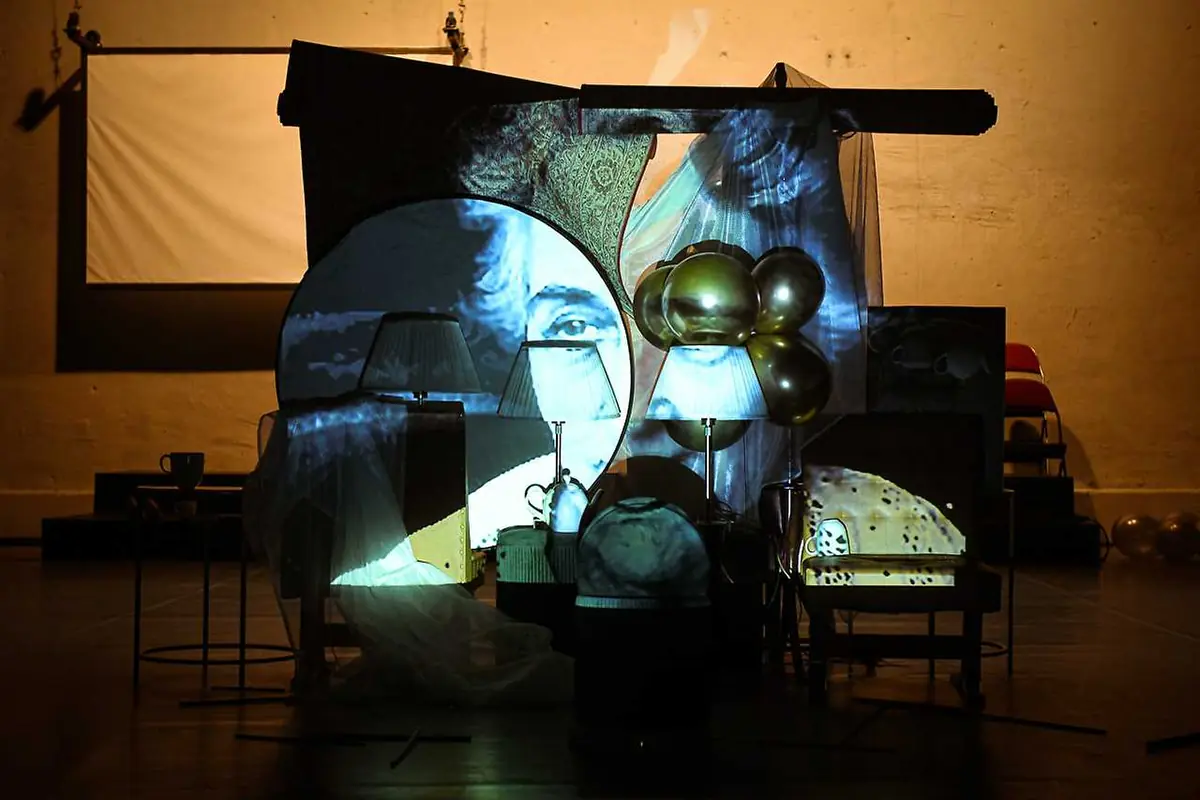
"Photography does not necessarily tell us what no longer exists, but only and certainly what once was. Once I received my photograph from a certain photographer, and no matter how hard I tried, I could not remember where I had been photographed; I examined my tie, my sweater, trying to figure out in what situation I wore them; in vain. Yet because it was a photographic image, I could not deny that I had been there (even though I did not know where). This curvature of certainty and forgetting caused me vertigo and 'detective' anxiety, I went to the photographer's exhibition as if I were going to an investigation, so that I might finally learn something about myself that I no longer knew."
***Romantically Scattering My Own Ashes* is a theatrical essay and a free adaptation of the final text by French philosopher and semiotician Roland Barthes.**
Roland Barthes (1915-1980) studied classical literature and philology. His work never formed a coherent whole with a single theoretical line - from the critique of history he gradually shifted toward general and applied semiology, and from the early seventies onward he developed his own distinctive way of thinking about literary texts, characterized by a rejection of generalizing systems and an emphasis on singularity and contingency. His final text is an essay on photography, Camera Lucida, which in many respects foreshadows a new turn in his work - a turn that was suddenly interrupted by his death in a car accident in 1980.
The production uses excerpts from Barthes' works Camera Lucida, Roland Barthes by Roland Barthes, and Mourning Diary.
Theater · Prague 452 in the next 30 days →
 86theaterSun 4.10.Images of Love – Black Light Theatre (Schwarzlichttheater)
 81theaterFri 9.10.Ivo Dimchev
 73theaterSun 4.10.Josephine Baker
 73theaterFri 16.10.The Importance of Being Philip
 70theaterSat 14.11.Lord of the Dance 2026
 69theaterSat 10.10.Amadeus
 100concertMon 14.12.Bryan Adams at Prague
 100concertSat 6.2.Editors (UK)
 100concertThu 21.1.Manowar Kings of Metal (Prague)
 96stand-upWed 24.2.Jimmy Carr: Laughs Funny
 95festivalThu 22.10.KarmaFest Mini Praha 2026
 95festivalFri 19.3.Black Night Sorceries MMXXVII