New Theory of Harmony + In the Eyes of the Dragonfly
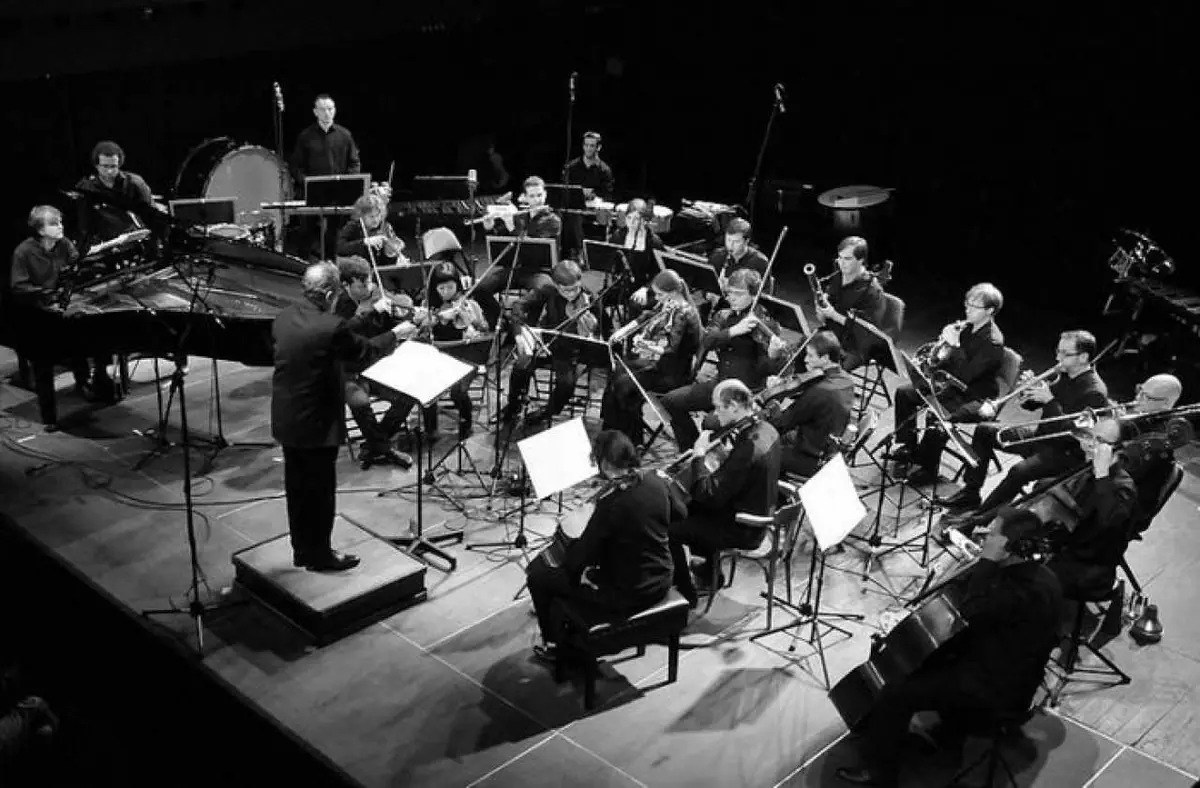
**25 June 18:30 – *New Theory of Harmony***
The composition draws on the ideas and texts of composer and theorist Alois Haba. The libretto is assembled from excerpts of his book Neue Harmonielehre des diatonischen, chromatischen, Viertel-, Drittel-, Sechstel- und Zwölftel-Tonsystems, published in 1927 in the German original and in 2000 in Czech translation under the title New Theory of Harmony of Diatonic, Chromatic, Quarter-tone, Third-tone, Sixth-tone and Twelfth-tone Systems. In this treatise, Haba defines the methodology of compositional work in microtonal systems and, through reflection on his own creative method, arrives at the idea of absolute creative freedom. The factual music-theoretical tract thus transforms into a musical drama about seeking, knowledge, and artistic freedom, in which rationality meets intuition and knowledge meets imagination.
The vocal part is divided between two contrasting voices. The female voice, whispering the text in German, represents inspiration, intuition, and the energy of youth; the male voice, reciting the Czech version of the same text, is the voice of the composer's mature age, experience, and reason. The instrumental ensemble consists of strings, woodwinds, and brass supplemented by a pair of pianos; the musical component moves within microtonal systems derived from quarter-tone tuning.
Microtonal opera for two voices and chamber ensemble, 2001–26
---
**25 June 20:00 – *In the Eyes of the Dragonfly***
In the Eyes of the Dragonfly is a one-act chamber opera based on a haiku by Issa: "In the eyes of the dragonfly / are reflected / distant mountains." This poem determines the optics of the entire work – from a tiny point, a wide space opens; from silence, a landscape emerges. The libretto is composed of selected haiku by Japanese masters, which function as independent existential images.
Seven musical images are born from unison, from a single sound and a single perspective, and gradually develop into a more complex sound structure of voices, string quartet, electric guitar, and quadraphonic electronics. The opera is constructed as a process in which the concentrated musical foundation gradually develops into more complex relationships.
Kampus Palace
Events · Ostrava 217 in the next 30 days →
 100classicalSun 29.11.VIVALDIANNO Shining Venice
 100concertSat 6.2.Floyds CZ/SK – Pink Floyd Symphony Show
 100festivalSun 29.11.Morbidfest 2026: I Am Morbid + Atheist + Cancer + Narcotic Wasteland
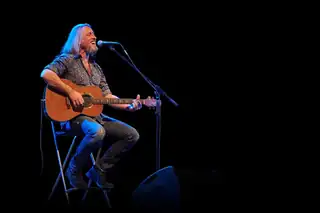 99concertThu 26.11.Kamil Střihavka: 40 Years on Stage
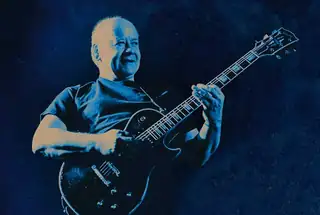 99concertTue 1.12.Tribute to Radim Hladík: MY GAME – Tour 2026
 97festivalSat 24.10.Folk Metal Pilgrims 2026
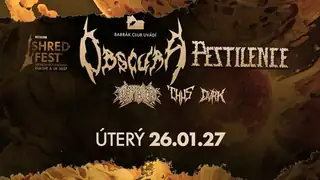 95festivalTue 26.1.SHRED FEST 2027 - OBSCURA, PESTILENCE, CRYPTIC SHIFT, THUS, DVRK
 86clubSat 17.10.DJ BoBo
 99concertSat 19.12.Dyk sou Vánoce
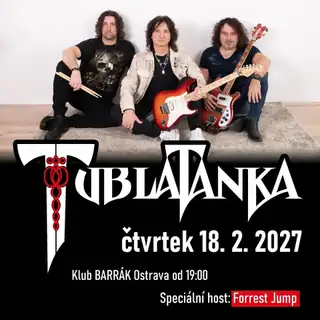 99concertThu 18.2.Tublatanka, Forrest Jump
 98concertThu 29.10.Uriah Heep
 98concertSat 21.11.Modestep (UK), Support