At the Crossroads: Interwar Architecture in Japan
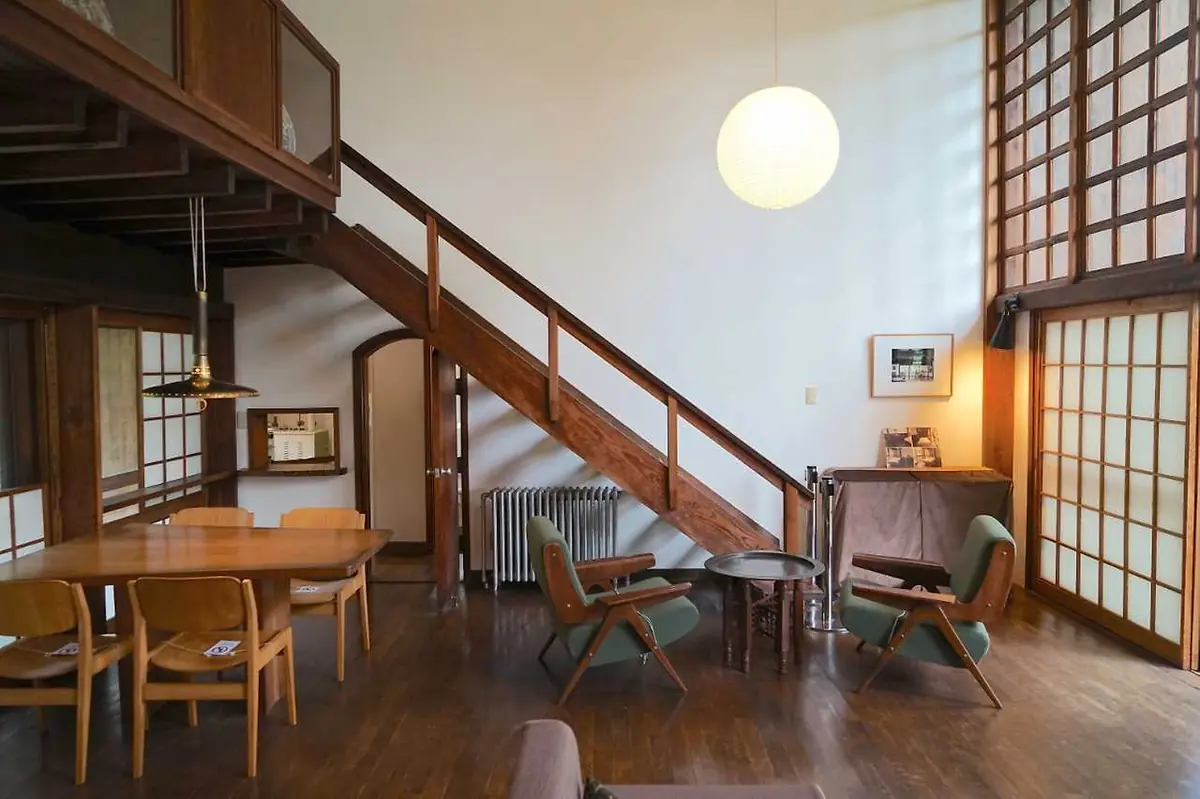
The creative team of Okolo presents an expanded version of the exhibition "At the Crossroads: Interwar Architecture in Japan" at Semlerova rezidence. The exhibition originated earlier this year for Winternitzova vila. The show draws on original Japanese research and photographic documentation by Štěcha, complemented by graphic design and exhibition architecture by his colleagues Matěj Činčera and Jan Kloss.
The exhibition showcases diverse examples of interwar Japanese modernist residential architecture, focusing on the interplay between Japanese building and cultural traditions with avant-garde influences from Europe and the USA. The featured houses represent distinctly different examples of Japanese modernism, in which the encounter and synthesis of East and West manifest in various ways.
The historical context spans from the Meiji era (1868–1912), when Japan underwent rapid modernization with support from Western powers, through the Taishō period (1912–1926) to the Shōwa era of Emperor Hirohito (1926–1989). In architecture, the first modernist pioneers began designing contemporary houses in the 1920s — among them Sutemi Horiguchi, Iwao Yamawaki, Koji Fujii, and Kameki and Nobuko Tsuchiu, as well as foreign figures Frank Lloyd Wright and Henri Rapin. The exhibition deliberately avoids the work of Czech architects Jan Letzel and Antonín Raymond, whose activities in Japan are better known domestically.
Several additional panels were created for Semlerova rezidence, extending the theme into public and residential realizations of early modernism and art deco.
Exhibitions · Plzeň 18 in the next 30 days →
 55exhibitionWed 17.6.Jan Solpera: Rounded
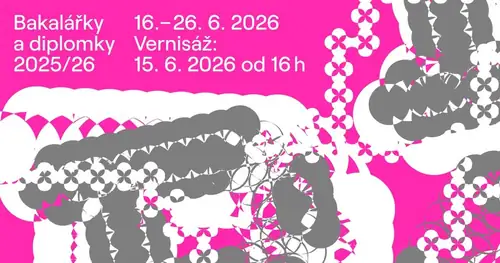 42exhibitionTue 16.6.Bachelor's and Diploma Works 2026 at Sutnarova
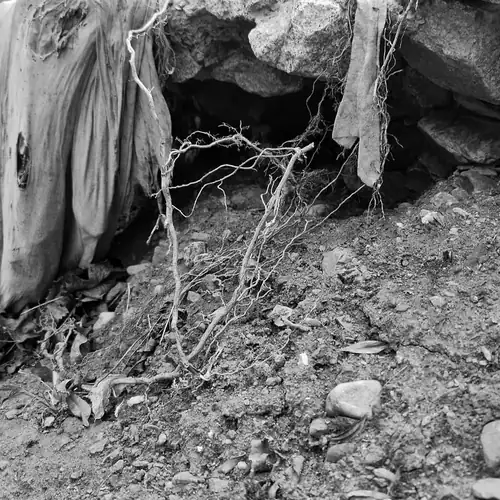 39exhibitionThu 18.6.Opening of the Exhibition "Beneath the Surface" – School Project
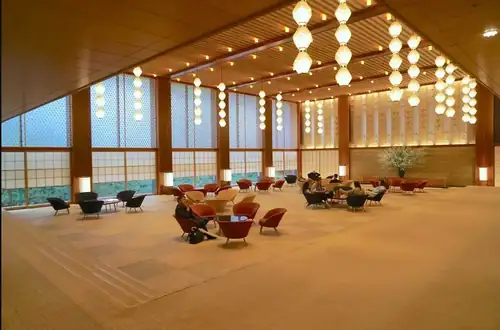 39exhibitionThu 25.6.Opening of the Exhibition "At the Crossroads: Interwar Architecture in Japan"
 39exhibitionWed 26.8.Creative Workshop for Children: Please Enter!
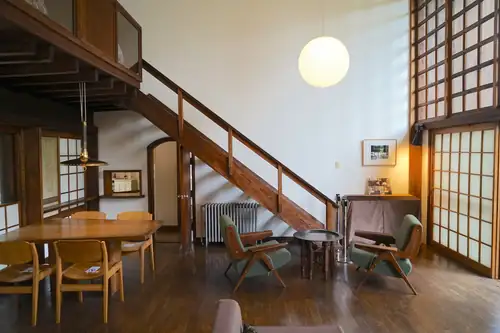 38exhibitionFri 26.6.At the Crossroads: Interwar Architecture in Japan
 92concertThu 18.6.Radka Fišarová: A Tribute to Édith Piaf
 88concertTue 14.7.QUEENIE 2026 - 20 YEAR TOUR
 88festivalSat 26.9.Return of the Titans: Pilsen 2026
 87concertSun 18.10.Ondřej Havelka and his Melody Makers: The Most Beautiful Numbers of the Season
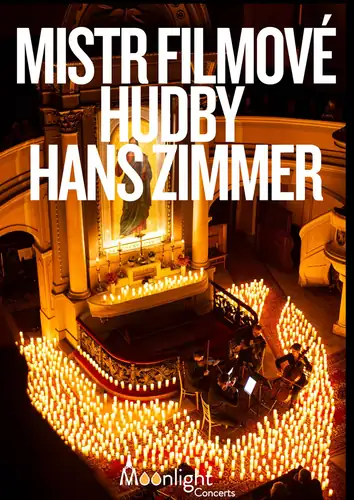 79classicalFri 21.8.Hans Zimmer: Master of Film Music
 78festivalSat 25.7.XI International Dixieland Festival Plzeň