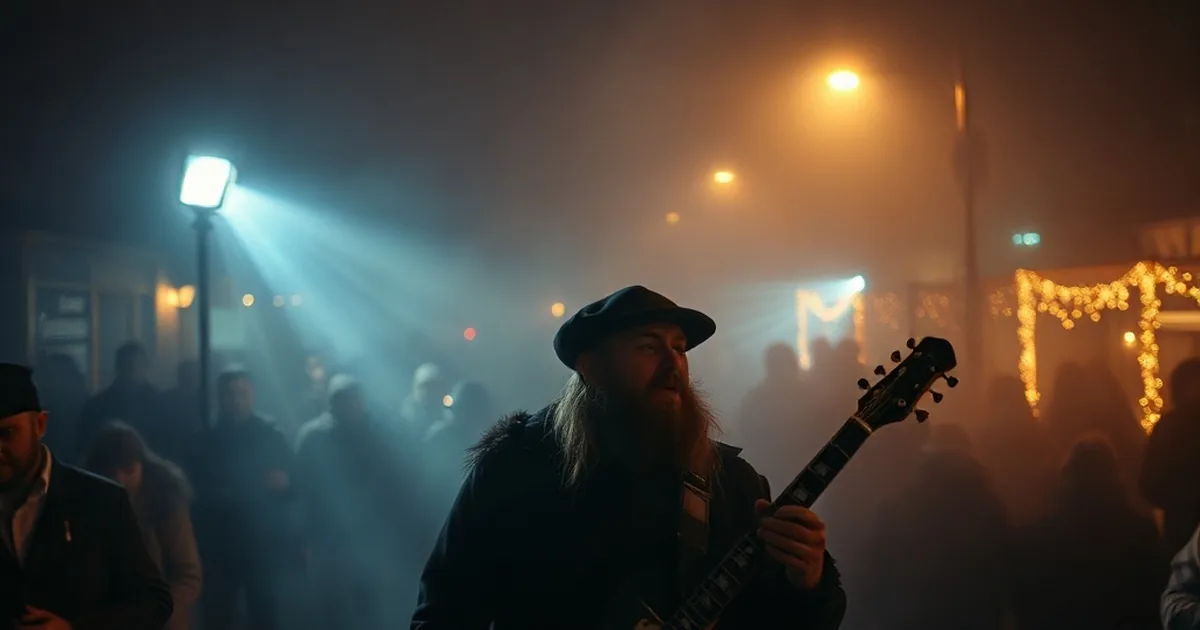
You may not know the name of the lead violinist, but you will almost certainly recognise the sound: melancholy violin, cimbalom and a voice that seems to have been drawn straight from the age of Great Moravia. That is Hradišťan. And here is a fact right at the start that will probably make you say "I didn't know that": this Moravian cimbalom band from Uherské Hradiště was selling out concerts in South Africa in January 1999, and a meeting with a local marimba player produced an album that went gold in the Czech Republic. So when the phrase Hradišťan Moravské Budějovice comes up, or one of their concerts is being held nearby, this is not a folklore museum piece for nostalgics. It is an ensemble that over seven decades has travelled from folk song to contemporary music and has never settled for just stomping dances and slivovitz.
Hradišťan Moravské Budějovice: why this ensemble is talked about
Hradišťan is one of the oldest and best-known Moravian cimbalom bands, and today it is a professional ensemble with an unusually wide stylistic range. When you search for Hradišťan Moravské Budějovice, you are really looking for an evening that is closer to a composed concert than to entertainment around a cimbalom.
The cimbalom band Hradišťan is one of the oldest and best-known Moravian cimbalom ensembles and was founded together with a dance company in 1950 in Uherské Hradiště. Over that time whole generations of musicians, singers and dancers have passed through the ensemble. The turning point came at the end of the 1970s. After the death of founder Jaroslav Václav Staněk on 28 February 1978, Jiří Pavlica became lead violinist. And it is his name that now appears alongside the band's name on every poster.
Jiří Pavlica has led the ensemble since 1978, and under his artistic direction and programming the originally folk ensemble transformed into an alternative music group spanning the arc from folk tradition and beyond. If you are expecting Hradišťan to come and play a few folk songs for dancing, you may be surprised. The repertoire points elsewhere.
Who Jiří Pavlica is and why everything rests on him
Pavlica is a violinist, singer and composer who turned Hradišťan from a regional cimbalom band into an ensemble with a cross-genre dimension. Without him, the ensemble would be talked about in a completely different way today.
Jiří Pavlica was born in Uherské Hradiště, studied musicology and cultural theory at the Faculty of Arts in Olomouc and violin at the Brno Conservatoire, and later studied composition privately under Jaroslav Krček. That explains a great deal: in his arrangements you can hear a Moravian folk song just as clearly as the work of a trained composer who knows what to do with a choir, strings or the silence between notes.
Under his hands Hradišťan became a workshop, not a museum. Original composition gradually began to assert itself, and it predominates in the music-and-dance projects on which Pavlica collaborated with choreographer and head of the dance section Ladislava Košíková. Alongside Pavlica, the band's sound is also held together by other regular soloists. The core soloists include Alice Holubová, Jiří Pavlica and David Burda.
And how busy is this ensemble? More than you might expect for a genre labelled "folklore". The main body of work consists of concert activity, amounting to approximately 150 performances a year. This is not a seasonal side project; it is a full-time band.
How cimbalom music differs from brass band music
A cimbalom band and a brass band are two completely different worlds, even though people sometimes lump them together as "folk music". The difference lies in the line-up, the sound and what the music is played for.
A brass band is built on wind instruments and percussion, is often played for marching or dancing, and its strength lies in the full, bright colour of the brass. Cimbalom music is more intimate and more melodic. The core consists of violins led by the lead violinist, together with cimbalom, double bass and further strings. The sound is more flexible, capable of moving from a wild tempo to an almost whispered hush, and a great deal depends on the lead violinist, who guides the music and improvises.
Hradišťan has pushed that foundation even further. Fine texts and emotionally charged music rooted in the melodic character of the Moravian folk song are the magic of an ensemble whose work has long outgrown the boundaries of the cimbalom music genre. In practice that means that at a single concert you will hear a traditional Moravian song alongside poetry set to music or a piece that is closer to classical music. So when you are browsing artist profiles before a concert, bear in mind that "cimbalom band" is only the starting point for Hradišťan, not the whole story.
Modlitba za vodu, Skácel and other things that take Hradišťan further
Hradišťan's greatest strength is the connection between music and poetry, above all the verses of Jan Skácel. This is also the source of the piece known even to people who would never otherwise listen to a cimbalom band.
That piece is Modlitba za vodu (Prayer for Water). The music was written by Jiří Pavlica to a text by Jan Skácel. The melancholic song about disappearing water in the landscape has become so widely known that it now lives a life of its own at concerts, in schools and on social media, and many listeners have no idea that it is performed by Hradišťan. It grew out of a larger work. A full-length composed programme and an album of the same name, O slunovratu (At the Solstice), were created to verses by Jan Skácel. The first three Jan Skácel poems set to music are waypoints through the year: the spring Modlitba za vodu, the summer Krátký popis léta (A Brief Description of Summer) and the autumn Sonet o lásce a modrém portugalu (Sonnet on Love and the Blue Portugal).
And then there is the story from the introduction, this time with documented details. It all began with sold-out concerts by Hradišťan in January 1999 in Stellenbosch on a tour of South Africa, where marimbist and virtuoso player of traditional African instruments Dizu Plaatjies joined the Moravian cimbalom band at one of the concerts. The meeting produced an album. In autumn 2002 a bonus CD, Ozvěny Afriky (Echoes of Africa), was released alongside the "gold" title Mys dobré naděje (Cape of Good Hope).
Africa and Skácel are not exceptions but a way of working. Pavlica has collaborated, among others, with Alister Anderson from Great Britain, with Yaz-Kaz from Japan on the CD Svítání (Dawn) and with Dizu Plaatjies from South Africa. And that this is not music only for Moravian concert halls is demonstrated by the map of his international engagements. He has performed at the Cervantino festival in Mexico, in Stellenbosch in South Africa, at Womad in Great Britain and at the World Festival of Sacred Music in Los Angeles. Hradišťan has recorded more than 25 major audio releases and has been applauded by audiences on four continents.
What to expect at a concert and who it is for
A Hradišťan concert is not entertainment around a cimbalom but a listening evening where temperament alternates with silence and where the music is often accompanied by spoken word or poetry. You sit down and listen; you do not dance between the tables.
The programme can be put together in different ways. Hradišťan offers its programme lines both as a standalone concert by the band and as a performance by the full ensemble including the dance section. It is worth knowing this in advance: the band alone makes for a more intimate listening evening, whereas the programme with dancers and Ladislava Košíková's choreography is a visually richer spectacle. Always check the poster or the annotation for a specific event to see which version is on offer.
The repertoire tends to favour big themes such as the cycle of the year or human life from birth to old age, so an evening usually has an inner arc and a mood that builds. Who will enjoy it? Certainly lovers of folk, world music and classical music, but also people who have not yet found their way to folklore and are looking for atmosphere rather than a party. If you are after a quieter, substantial cultural evening, this is a safe choice. You can find more ideas for events in the region in our events calendar.
Where to keep an eye on dates and tickets (and what lies behind that)
We cannot promise you a specific date for a Hradišťan concert in Moravské Budějovice, because dates change on an ongoing basis. The most reliable approach is to check current information directly with official sources and with the venue organiser.
In practice that means following the band's official website hradistan.cz, where the ensemble publishes its concert list, and the pages of the organiser or cultural centre at the venue. Tickets for events like these are usually sold through standard advance booking networks and the local town information centre. Because Hradišťan plays approximately 150 concerts a year across the country, the chances of finding a date near you are reasonable even outside large cities - it is just worth buying your ticket early, as smaller venues fill up quickly.
While waiting for a new date to appear, there is other culture to be found in South Bohemia and the surrounding area. From the current programme in České Budějovice, worth a mention are the ballet production Da Vinci at the South Bohemian Theatre, the guided walk Za příběhy státní hranice: Pohoří na Šumavě by Paměť národa, or a calm summer morning with yoga at Letní kino Háječek. These are not substitutes for Hradišťan - rather options for filling an evening until the right concert comes along.
Frequently asked questions
Who is Jiří Pavlica?
He is a violinist, singer and composer who leads Hradišťan. He became lead violinist after the death of founder Jaroslav Václav Staněk in February 1978. He was born in Uherské Hradiště, studied musicology in Olomouc and violin at the Brno Conservatoire, and studied composition privately under Jaroslav Krček.
Is Hradišťan just a folklore band?
It is not. Although it draws on the Moravian folk tradition, it reaches much further in terms of genre. It is a professional ensemble that works programmatically above all with the legacy of folk tradition and its philosophical dimension, crosses genre boundaries and collaborates with personalities from different cultures around the world.
When was Hradišťan founded?
It was founded in 1950 in Uherské Hradiště, together with a dance company. It is thus one of the oldest Moravian cimbalom bands in existence.
What is Hradišťan's best-known song?
For many people it is Modlitba za vodu. The music was written by Jiří Pavlica to verses by Jan Skácel, and the song belongs to the programme and album O slunovratu.
Where can I buy tickets for a concert in Moravské Budějovice?
We cannot confirm a specific date or sales channel for Moravské Budějovice here. Follow the band's official website and the pages of the local organiser, where the date and a link to advance booking will appear. You can also find an overview of further concerts in the region in our concerts section.
Sources
- Hradišťan & Jiří Pavlica, official website (history, discography, Mys dobré naděje project) - hradistan.cz
- Czech UNESCO Heritage, profile of Hradišťan & Jiří Pavlica - unesco-czech.cz
- Wikipedia, entries for Hradišťan and Jiří Pavlica
- Slovácký deník, retrospective on the ensemble's 70th anniversary
- Czech Radio Plzeň, Hradišťan: Modlitba za vodu
- kdykam.com, events in the region: Da Vinci, Za příběhy státní hranice: Pohoří na Šumavě, Jóga s Kačkou Novákovou