Night on Earth
Kino Dlabačov, Prague

Night on Earth is Jim Jarmusch's second color film and his second work screened at Kino Dlabačov. Compared to his club debut Stranger Than Paradise, Jarmusch's poetics have opened up to a wider audience, while the contrast between surface entertainment and the bitter undertone of "everyday" stories deepens further.
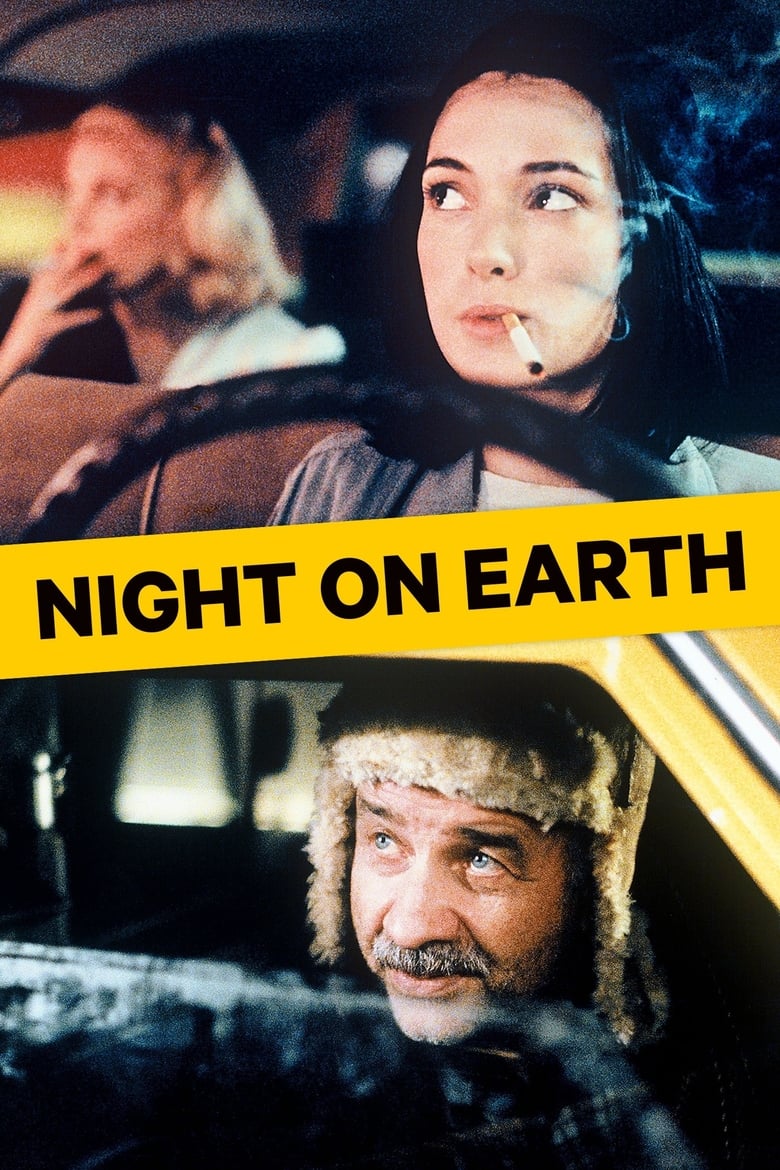
The film is structured as five stories unfolding simultaneously during a single night across five time zones and five major cities — Los Angeles, New York, Paris, Rome, and Helsinki — each in its respective language. The characters are taxi drivers and their passengers. Jarmusch subtly parodies the typical figures, genres, and styles of individual cinematographies (Hollywood, the New York school, French neo-baroque cinema, Italian farce, the melancholic Nordic films of Aki Kaurismäki), evident in the narrative rhythm, casting choices, and Tom Waits' music. Cinematographer Frederick Elmes, a collaborator of David Lynch, extracts maximum effect from the necessarily static camera confined to the taxi interior and passing city streets.
Seemingly random situations compose a portrait of a world full of paradoxes, inhabited by sighted blind people and homeless people who are at home everywhere.