Maalem Houssam Guinia (MA)
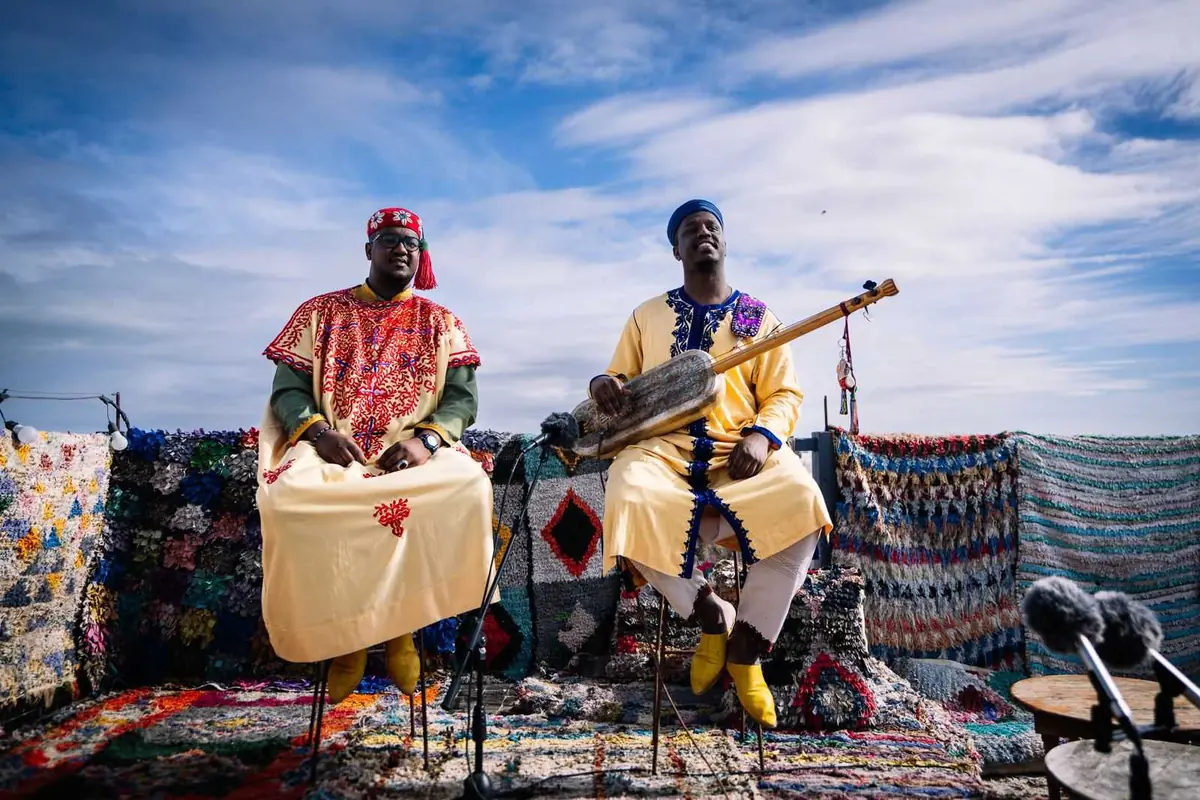
Morocco's parallel to American blues
Since the 7th century, Moroccans have engaged in the slave trade with Black Africans, a history that left its mark on music. The descendants of enslaved people, known as gnawa, created a fascinating genre intertwined with all-night trance rituals called lila. Among its most prominent figures was Mahmoud Guinia, a sought-after collaborator of American improvisers like Pharoah Sanders and Hamid Drake. Coming to Prague is his son Houssam Guinia, remarkable for having earned the title maalem - reserved for master musicians - before turning thirty. Though the genre emerged in Black communities much like American blues, gnawa differs in both sound and social function. The backbone of gnawa music is cyclical singing accompanied by the hypnotic tones of the guimbri bass lute and sharp rhythmic metal percussion. While blues testifies to oppression and hope in the Western world, gnawa is a direct link to the magical djinn of African spirituality.
When Robert Plant and Jimmy Page of Led Zeppelin traveled to Marrakech in 1994, they recorded there with gnawa musicians. This music has long attracted American jazz musicians. Saxophonist Patrick Brennan recalls: "When I first heard gnawa musicians, they fascinated me. In their singing I heard blue notes familiar from blues. The melodic structure reminded me of the classics by John Coltrane." Houssam Guinia recorded his album Dead of Night, which gained cult status, performed live in one take in Casablanca, Morocco. It is a deeply intimate and spiritual statement without accompaniment from other instruments. Houssam sings songs he learned from his father.
Over the past two decades, gnawa music has reached world stages. The genre's largest event is the Essaouira Gnaoua and World Music Festival, founded in 1998 (gnaoua is the French spelling of the English transcription gnawa). Yet the authentic home of this music remains private rituals. When a Moroccan moves into a new house, they invite a gnawa band to cleanse it of evil spirits. The lila ceremony continues until dawn. Until midnight the music follows
Concerts · Prague 583 in the next 30 days →
 100concertWed 18.11.Hans Zimmer Film Music by Candlelight
 100concertSat 6.2.Editors (UK)
 100concertThu 18.2.Cameron Whitcomb - The Kingdom Of Fear EU/UK Tour 2027
 100concertThu 21.1.Manowar Kings of Metal (Prague)
 100concertFri 14.5.SUICIDE SILENCE, FLESHGOD APOCALYPSE, TO THE GRAVE a další
 99concertSun 22.11.Pitbull - I'm back!
 95festivalFri 19.3.Black Night Sorceries MMXXVII
 99concertSun 13.12.Bryan Adams in Prague
 99concertTue 29.12.FRANK SINATRA & FRIENDS Live Show from Las Vegas
 99concertSat 30.1.Tublatanka Alphaville Argema
 99concertSun 21.2.THE UNOFFICIAL ERAS TOUR (Prague's Version) LOVER – Taylor Swift Tribute by Charity Eden
 99concertWed 24.2.Electric Callboy: Tanzneid World Tour